
Skincare has become far more ingredient-aware, and for good reason. More people are reading labels, asking better questions, and paying closer attention to what they put on their skin each day.
For many, “cleaner” skincare is not about fear. It is about being informed. It is about choosing products that feel gentler, simpler, and better suited to their skin, especially when that skin is sensitive, reactive, or already under stress.
While not every ingredient is harmful in every formula, there are certain ingredients that many people prefer to avoid, particularly when building a more mindful skincare routine.
Why ingredient awareness matters
The skin is exposed to a great deal every day. Weather, pollution, stress, changing seasons, and the products we apply can all affect how it feels and behaves.
That is why ingredient choices matter.
For people with sensitive or easily irritated skin, certain ingredients can sometimes feel too harsh, too drying, or simply not well suited to their needs. In those cases, choosing skincare more carefully can make a meaningful difference.
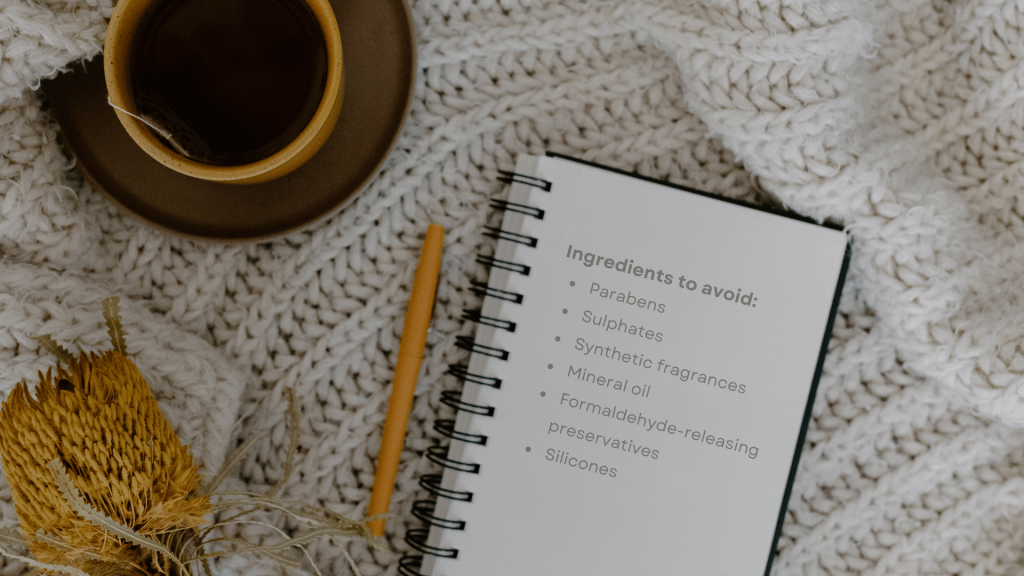
Ingredients many people choose to avoid
1. Parabens
Parabens are preservatives used to extend shelf life and prevent microbial growth in cosmetic products.
They are widely used in beauty and personal care, but they are also one of the ingredient groups many consumers prefer to avoid. This is often due to ongoing concern around their potential to mimic hormones in the body, as well as a general preference for simpler preservation systems.
For many people, especially those looking for a more natural or wellness-led routine, paraben-free skincare feels like a more comfortable choice.
2. Sulphates
Sulphates, including ingredients such as SLS and SLES, are commonly used as cleansing and foaming agents.
They are often found in face washes, body products, and haircare, but they can be quite stripping for some skin types. If skin is already dry, sensitive, or easily irritated, sulphates may leave it feeling tight or uncomfortable after cleansing.
That is one reason many people look for gentler alternatives that cleanse without disrupting the skin’s natural balance.
3. Synthetic fragrances
Fragrance can make a product feel beautiful to use, but synthetic fragrance blends are one of the most common triggers for irritation in sensitive skin.
For some people, synthetic fragrance may lead to discomfort, redness, or reactivity. Others prefer to avoid it simply because fragrance formulas can be complex and not always fully transparent on a label.
This is why fragrance-aware skincare has become more important, especially for those who want to keep routines calm and uncomplicated.
4. Mineral oil
Mineral oil is a petroleum-derived ingredient often used to create a protective layer on the skin.
While it can be effective in some formulas, many consumers prefer to avoid it in favour of plant-based oils such as jojoba, argan, or coconut oil. For natural skincare customers in particular, there is often a preference for ingredients that feel more botanical and less synthetic in origin.
5. Formaldehyde-releasing preservatives
These preservatives are used in some cosmetic formulations to help prevent contamination, but they are also widely avoided by people with sensitive skin or those seeking a more ingredient-conscious routine.
They are often flagged because of their irritation potential, particularly for reactive skin.
6. Silicones
Silicones are often added to give skincare a smooth, silky feel on the surface of the skin.
Some people enjoy that finish, while others prefer to avoid silicones because they want formulas that feel lighter, more breathable, or more aligned with a natural skincare philosophy. In some routines, consumers prefer plant oils and butters that offer softness and nourishment in a more botanical way.
Not every ingredient works the same way in every product, and not every person reacts the same way. A well-formulated product depends on the full formula, not just one ingredient in isolation.
It is also worth remembering that “free-from” claims do not automatically make a product better. Some brands remove one ingredient only to replace it with another that is just as harsh or unsuitable for sensitive skin.
That is why reading ingredient lists carefully still matters.
What to choose instead
If you are trying to build a gentler routine, it can help to look for products that rely on more supportive, skin-friendly ingredients.
Many people prefer formulas built around:
- botanical oils
- plant butters
- gentler cleansing agents
- simpler preservation systems
- lower-fragrance or fragrance-aware formulas
- ingredients chosen to support the skin barrier
The goal is not perfection. It is simply to choose products that feel more thoughtful, more suitable, and more aligned with what your skin needs.
When in doubt, keep skincare simple.
Look for products that:
- feel gentle on the skin
- do not leave skin tight or stripped
- support moisture and barrier care
- avoid unnecessarily harsh ingredients where possible
- are well suited to your skin type and sensitivities
Skincare does not need to be complicated to be effective. Sometimes the best choice is simply the one that feels calmer, gentler, and more considered.
Being ingredient-aware is not about fear. It is about understanding what works for your skin, what does not, and how to build a routine that feels supportive from start to finish.
For many people, that starts with learning what they would rather leave out.